

Aerial Equipment
RENTALS: Scissor Lifts, Boom Lifts
Scissor Lifts & Boom Lifts
RENTALS: Aerial Equipment

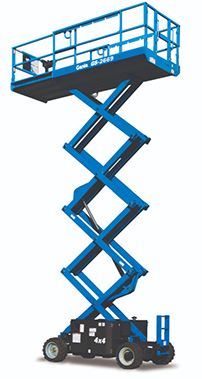
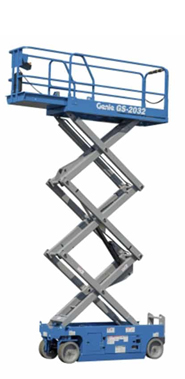
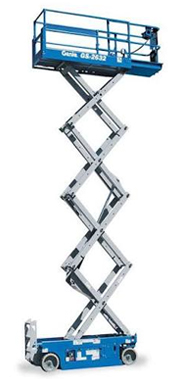
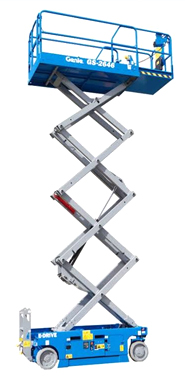
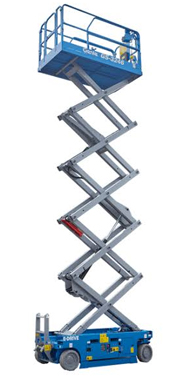
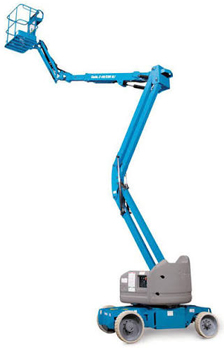
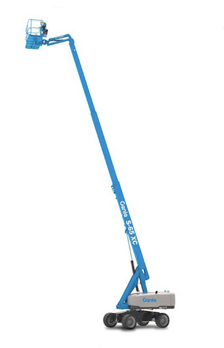
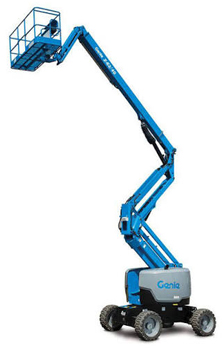
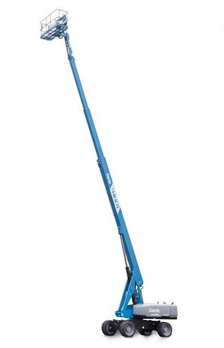
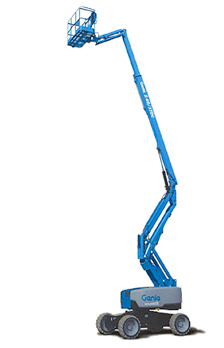
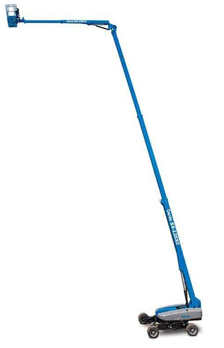
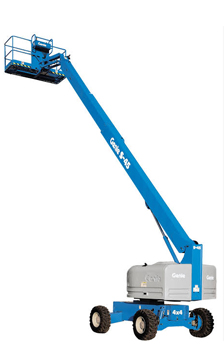
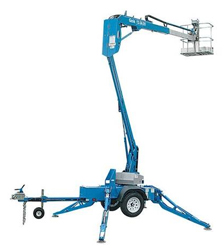
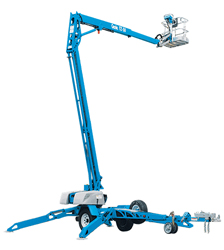
Specs comparison:
Request Rental:
Genie Aerial Lift Comparison Tables
1) Rough Terrain Scissor Lifts
| Specification | 26’ RT (GS-2669 RT) | 33’ Wide (GS-3369 RT) | 40’ Wide (GS-4069 RT) |
| Working Height | 32 ft | 39 ft | 46 ft |
| Lift Capacity | 1,250 lb | 1,000 lb | 800 lb |
| Machine Width | 5 ft 9 in | 5 ft 9 in | 5 ft 9 in |
| Length | 10 ft 6 in | 10 ft 6 in | 10 ft 6 in |
| Height (rails up) | 8 ft 2 in | 8 ft 2 in | 8 ft 2 in |
| Weight | 7,275 lb | 8,420 lb | 10,315 lb |
| Drive Type | 4WD rough terrain | 4WD | 4WD |
2) Electric Scissor Lifts (Slab)
| Specification | 19’ Narrow (GS-1930) | 26’ Narrow (GS-2632) | 26’ Standard (GS-2646) |
| Working Height | 25 ft | 32 ft | 32 ft |
| Capacity | 500 lb | 500 lb | 1,000 lb |
| Width | 2 ft 6 in | 2 ft 8 in | 3 ft 10 in |
| Length | 6 ft | 8 ft 0 in | 8 ft 0 in |
| Height | 6 ft 6 in | 6 ft 3 in | 7 ft 0 in |
| Weight | 3,209 lb | 4,515 lb | 5,702 lb |
3) Rough Terrain Boom Lifts
| Specification | 45’ Boom | 60’ Boom | 80’ Boom |
| Working Height | 51 ft | 66 ft | 86 ft |
| Horizontal Reach | 36 ft | 50 ft | 71 ft |
| Width | 7 ft 6 in | 8 ft 2 in | 8 ft 2 in |
| Length | 27 ft | 29 ft | 37 ft |
| Height | 8 ft 0 in | 8 ft 6 in | 9 ft 0 in |
| Weight | 13,500 lb | 22,000 lb | 35,000 lb |
With Jib Models
| Specification | 45’ w/ Jib | 65’ w/ Jib | 85’ w/ Jib | 135’ w/ Jib |
| Working Height | 51 ft | 71 ft | 91 ft | 141 ft |
| Horizontal Reach | 36 ft | 56 ft | 74 ft | 90 ft |
| Up & Over Reach | Moderate | High | Very high | Extreme |
| Width | 7.5 ft | 8 ft | 8 ft | 11 ft |
| Weight | 14,000 lb | 24,000 lb | 37,000 lb | 44,000 lb |
4) Towable Boom Lifts
| Specification | 34’ Towable (TZ-34/20) | 50’ Towable (TZ-50) |
| Working Height | 40 ft | 56 ft |
| Horizontal Reach | 18 ft | 29 ft |
| Stowed Length | 18 ft | 24 ft |
| Width (stowed) | 5 ft 6 in | 5 ft 6 in |
| Height (stowed) | 6 ft 6 in | 6 ft 9 in |
| Weight | 3,630 lb | 4,400 lb |
| Power | Electric / gas | Electric / gas |
Frequently asked questions:
Rough Terrain Scissor Lifts
What are rough terrain scissor lifts used for?
They are designed for outdoor work on uneven ground, such as:
- Construction sites
- Steel erection
- Framing and roofing
- Outdoor maintenance
What powers these machines?
Typically diesel engines, providing:
- High torque
- Ability to operate on rough terrain
What features make them suitable for rough terrain?
- 4WD capability
- Foam-filled or rough-terrain tires
- Oscillating axles
- Automatic leveling outriggers (on many models)
Can they be used indoors?
Generally no due to:
- Diesel emissions
- Large size and weight
What is platform capacity?
- Typically 1,000–1,500+ lbs, depending on model
Electric Scissor Lifts
What are electric scissor lifts used for?
Ideal for indoor or flat-surface work, including:
- Warehouses
- Retail stores
- Facility maintenance
- Electrical and HVAC work
What powers them?
- Battery-electric systems (quiet, zero emissions)
What are their main advantages?
- Quiet operation
- No emissions (indoor-safe)
- Compact size for tight aisles
- Lower operating costs
What is platform capacity?
- Typically 500–1,000 lbs
Can they be used outdoors?
Yes, but only on:
- Flat, firm surfaces
- Calm weather conditions
Rough Terrain Boom Lifts
What are rough terrain boom lifts used for?
They provide height and outreach, used for:
- Steel erection
- Bridge work
- Industrial construction
- Tree work and maintenance
What is the difference between telescopic and articulating booms?
Telescopic (straight boom):
- Maximum horizontal reach
- Ideal for open areas
Articulating boom:
- Bends at joints
- Can reach up and over obstacles
What powers them?
- Diesel engines (some hybrid options available)
What is platform capacity?
- Typically 500–1,000 lbs
What makes them suitable for rough terrain?
- 4WD
- Large tires
- High ground clearance
- Strong gradeability
Towable Boom Lifts
What are towable boom lifts used for?
Best for light-duty, mobile applications, such as:
- Residential work
- Tree trimming
- Painting
- Sign installation
How are they transported?
- Towed behind a pickup truck or SUV
- No heavy equipment trailer required
What powers them?
Options include:
- Gasoline engines
- Electric (plug-in or battery)
- Hybrid systems
What are their main advantages?
- Lightweight and portable
- Lower cost than self-propelled lifts
- Easy setup with outriggers
What are their limitations?
- Must be repositioned manually (not self-driving)
- Lower capacity (~500 lbs typical)
- Slower setup compared to self-propelled units
General Genie Aerial Lift FAQs
What safety features are standard?
- Guardrails and harness tie-off points
- Emergency stop controls
- Tilt and overload sensors
- Descent alarms
Do operators need training?
Yes—operators should be trained per:
- OSHA standards
- Manufacturer guidelines
How do I choose the right lift?
Depends on:
- Height needed
- Indoor vs outdoor use
- Terrain conditions
- Need for outreach vs vertical lift
What industries use these lifts?
- Construction
- Facility maintenance
- Warehousing
- Utilities
- Tree care
When should I use each type?
- Electric scissor: indoor, flat surfaces
- RT scissor: outdoor, vertical work, rough ground
- RT boom: outdoor, need reach and flexibility
- Towable boom: light-duty, portable jobs