

Compact Construction Equipment
RENTALS: Compact Wheel Loaders
Compact Construction Equipment
RENTALS: Compact Wheel Loaders
Available Compact Wheel Loader Models:
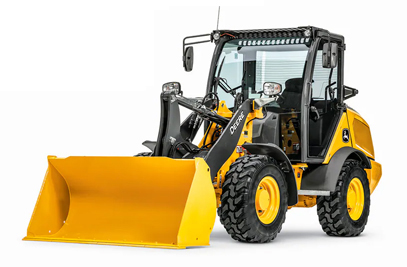
Power: 62 hp
Operating Weight: 11,900 lbs.
Bucket Capacity: 1 cu. yd.
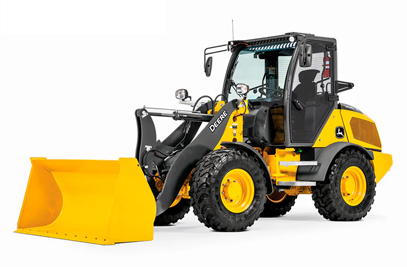
Power: 72 hp
Operating Weight: 13,100 lbs.
Bucket Capacity: 1.4 cu. yd.
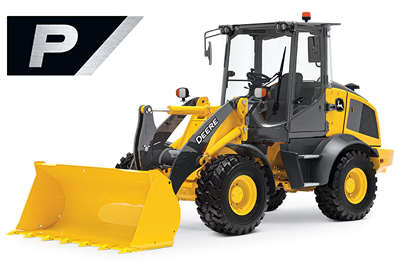
Power: 71 hp
Operating Weight: 14,700 lbs.
Bucket Capacity: 1.4cu. Yd.
Attachments:
Rental Rates:
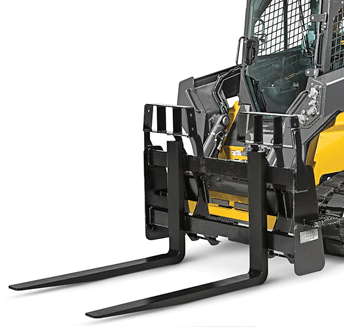 Pallet Forks Pallet Forks |
| Models | Day | Week | 4 Week Rate |
| 204G | $375 | $1,200 | $3,400 |
| 304G | $425 | $1,300 | $3,900 |
| 324P | $485 | $1,500 | $4,500 |
Daily Rate = Includes up to 8 hours of usage within a 24 hour period. Weekly Rate = Includes up to 40 hours of use within 7 consecutive days.
4-Week Rate (28 Days) = Includes up to 160 hours of use within 28 consecutive days. Note: The 4-Week Rate is based on a 28-Day billing cycle, not a calendar month. This results in 13 billing periods a year.
Specs comparison:
| Specification | 204G | 304G | 324 P-Tier |
| Net HP | 62 hp | 72 hp | 71 hp |
| Operating Weight | 11,508 lb | 13,051 lb | 14,110 lb |
| Bucket Capacity | 0.9–1.4 yd | 1.0–2.1 yd | 1.0–2.1 yd |
| Height (to cab) | 8 ft 1 in | 8 ft 8 in | 9 ft 1 in |
| Length | 18 ft 2 in | 19 ft 3 in | 19 ft 7 in |
| Width | 69.3 in | 73.2 in | 74.8 in |
| Wheelbase | 7 ft 4 in | 8 ft 0 in | 8 ft 2 in |
| Turning Type | Articulated | Articulated | Articulated + rear steer |
| Series | G-Tier | G-Tier | P-Tier |
Frequently asked questions:
What are compact wheel loaders used for?
- Loading trucks with dirt, gravel, or mulch
- Snow removal
- Landscaping and property maintenance
- Material handling (pallets, stone, feed)
- Municipal and road work
What are the advantages over skid steers?
- Smoother ride (articulated steering vs. skidding)
- Less surface damage (great for pavement and turf)
- Better visibility to the bucket and surroundings
- Higher travel speeds
How do they compare to compact track loaders?
Wheel loaders:
- Faster and more fuel-efficient
- Better on hard surfaces
- Lower maintenance (no tracks)
Track loaders:
- Better traction in mud/snow
- Lower ground pressure
- Better for rough terrain
What is operating capacity?
Instead of ROC (like skid steers), wheel loaders are rated by:
- Tipping load
- Operating weight
Typical tipping loads:
- 184 G: ~8,000 lbs
- 324 P: ~11,000+ lbs
What is hinge pin height?
This is the maximum height of the loader arms at the pivot point:
- Smaller models: ~10 ft
- Larger models: ~11–12 ft
Important for loading trucks or hoppers.
What attachments can be used?
They support many attachments, including:
- Buckets (general purpose, light material)
- Pallet forks
- Snow pushers and blades
- Grapples
- Brooms
Couplers vary (skid steer style or ISO), depending on configuration.
Are they good for snow removal?
Yes—especially for:
- Parking lots
- Sidewalks
- Municipal work
They’re fast, maneuverable, and easy on pavement.
What kind of fuel consumption do they have?
Generally efficient:
- ~1.5 to 3 gallons per hour
Varies with load and usage.
Are they comfortable to operate?
Yes—key features include:
- Spacious cab with heat/AC
- Adjustable suspension seat
- Joystick steering and controls
- Excellent all-around visibility
Do they damage pavement or turf?
Very little compared to skid steers:
- Articulated steering avoids tire scrubbing
- Ideal for finished surfaces and landscaping
How easy are they to maintain?
Maintenance is generally straightforward:
- Daily: fluid checks, tire inspection
- Regular: engine oil, filters, hydraulic system
- Lower undercarriage costs than tracked machines
How long do tires last?
Typically:
- 1,500–3,000 hours, depending on:
- Surface type
- Load weight
- Driving habits
Are they stable when lifting?
Yes—especially compared to skid steers:
- Longer wheelbase
- Articulated design
- Better balance when carrying loads
Can they lift pallets effectively?
Yes—wheel loaders are excellent for pallet work due to:
- Smooth movement
- Visibility to forks
- Stable load handling
Are they good for tight spaces?
Yes—articulated steering allows tight turning without skidding, making them ideal for:
- Yards
- Driveways
- Urban job sites
Request Rental: